
Build, Market & Automate Your Plumbing Business for Growth
We help plumbing companies generate more leads, rank higher on Google, build high-converting websites and automate customer communication using AI.
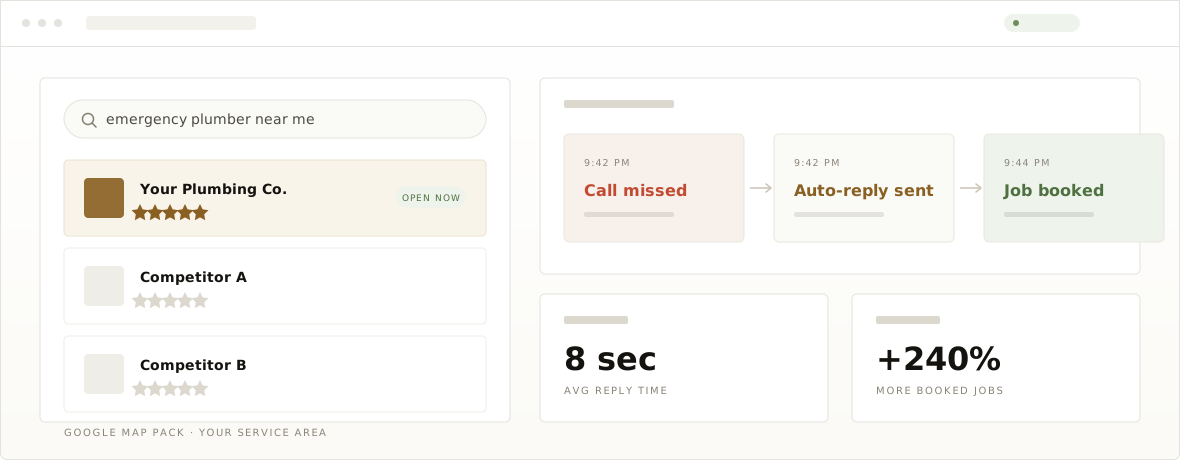
Why plumbing has become an online business
Ten years ago, a plumbing business grew on word of mouth, a phone-book listing and a magnet on the fridge. Today the entire buying journey has moved to a screen. When a homeowner has a leak or a dead water heater, their first move is to search Google for plumber near me or emergency plumber. Within a minute they have looked at the top three results, skimmed the star ratings, and tapped to call one.
This changes how you win work. The plumbing company with the strongest online presence, reviews and response time gets the call — not necessarily the one with the most experience. Your website and marketing are now your storefront, your first impression and your sales team, all at once. When they work, the phone rings with good jobs. When they do not, you never find out about the work you lost.
An outdated website is quietly losing you jobs
Your website is the single most important asset in your marketing, because every ad, search result and referral eventually lands there. If it is slow, hard to use on a phone, or looks a decade old, visitors leave in seconds — and a homeowner who leaves simply taps the next plumber on the list.
More than half of local searches happen on a phone, often by someone stressed and standing in a flooding bathroom. If they have to pinch, zoom or wait for a heavy page, you have lost them. A website is not a brochure that sits there looking nice; it is a tool whose only job is to turn a worried visitor into a booked call.
How professional web development fixes it
A well-built plumbing website is fast, mobile-first and designed around one goal: getting the visitor to call or book. That means a click-to-call button always visible on mobile, clear pages for each service, upfront trust signals, and online booking for the customers who prefer not to phone.
- Loads in under two seconds on a phone, so nobody bounces
- A tap-to-call button fixed to the screen on mobile
- Dedicated pages for drain cleaning, water heaters, leaks and emergencies
- Reviews, licensing and guarantees shown where they build trust
- Built on clean, fast code that Google can rank
How digital marketing fixes it
Getting there is a discipline called local SEO. It starts with a fully optimized Google Business Profile, supported by a website structured around the services and towns you cover, and reinforced by consistent listings and a steady stream of genuine reviews.
- A Google Business Profile optimized to rank in the map pack
- Service and service-area pages targeting the exact terms customers search
- Local schema and citations so Google trusts your details
- An automated system for collecting reviews after every job
You do not show up when homeowners search
You can have the best website in town, but if it never appears in search results, no one sees it. The biggest source of free, high-intent plumbing leads is Google’s local map pack — the three businesses shown with a map at the top of local searches. For terms like plumber near me and water heater repair, that map pack captures most of the clicks. If you are not in it, you are invisible to most of your market.
Getting there is a discipline called local SEO. It starts with a fully optimized Google Business Profile, supported by a website structured around the services and towns you cover, and reinforced by consistent listings and a steady stream of genuine reviews.
Emergency customers cannot reach you fast enough
Plumbing is an emergency business, and emergencies do not wait for business hours. A burst pipe at 9pm goes to whichever plumber the homeowner can reach right now. Research on home-service buyers repeatedly finds the same pattern: the first business to respond usually wins the job, even over cheaper or better-reviewed competitors. The trouble is no plumber can answer every call — so the leads you miss are gone, and you never know they existed.
Two systems solve this. Google Local Services Ads put you at the very top for urgent searches, with calls tracked so you know which marketing produced which job. And missed-call text-back instantly sends anyone whose call you miss a friendly text with a booking link, so a 2am emergency never quietly goes to a competitor.
You compete on price instead of value
If most of your enquiries just want the cheapest drain clean, the issue usually is not your pricing — it is your positioning. A dated, generic or slow website signals “commodity,” and commodity businesses can only compete on being cheapest, a race to the bottom no good plumber wins.
A professional website that leads with real reviews, guarantees, licensing, financing and photos of finished work reframes the conversation. Now the homeowner is not choosing the cheapest plumber — they are choosing the safe, obviously-professional one. That is a decision made on value, and it lets you charge what your work is worth.
Leads and follow-ups slip through the cracks
Many plumbing businesses lose more money to disorganization than to competition. A quote that never got followed up. A voicemail nobody returned. A past customer who would happily have booked their annual water-heater flush if anyone had reminded them. Each one is quiet, invisible lost revenue.
A simple CRM and automation setup closes those gaps. Every lead lands in one dashboard, follow-ups send automatically, and past customers get gentle seasonal reminders. Add an AI assistant to answer common questions and book around the clock, and your business stops leaking leads entirely.
How web development and digital marketing work together
Individually, each fix helps. Together they compound into one system, where your website is the hub and everything else feeds into it:
Marketing drives the right people to a website built to convert them, automation catches everyone who slips past, and your CRM turns them into repeat business. That is the difference between a plumbing company that hopes the phone rings and one that knows exactly where its next job is coming from.
What realistic results look like
Done properly, this shows up in the only numbers that matter: more calls, more booked jobs and a fuller schedule. The plumbing and home-service businesses we work with typically see stronger local rankings, a meaningful lift in website traffic, and a steadier flow of the jobs they actually want.
It does not happen overnight — SEO builds over a few months, ads produce faster, and automation pays off immediately by capturing calls you were already losing. But because everything is tracked, you always know which marketing produced which job. If you would like to see what this could look like for your business, a free strategy call will map out the exact plan.
Get a free plumbing marketing plan built for your service area.
Plumbing Marketing Questions, Answered
It depends on your market and how fast you want to grow. We quote after a short call based on what you actually need — a clear, fixed price with no hourly creep, and everything is month to month.
They are the top Google listings with the green Google Guaranteed badge. You pay per lead instead of per click, which makes them one of the best channels for plumbers capturing ready-to-book calls.
Paid ads can produce calls within days. Local SEO typically shows meaningful movement in three to six months and compounds from there. Most plumbers run both.
We set up the systems to capture them — instant missed-call text-back, after-hours routing and online booking — so a 2am burst-pipe call never goes to a competitor.
Yes. We build real location targeting for every town and neighborhood you serve, with genuine local content rather than one page repeated with the place name swapped.
No. Everything is month to month. If the phone is ringing you will stay; if it is not, you should not be locked in.
Let’s Grow Your Plumbing Business
Book a free call and we will map out the SEO, ads and automation that keep your plumbing schedule full.
- We audit your site, search presence, ad accounts and follow-up
- You leave with the three fixes worth doing first
- Our honest read — including if you do not need us yet